Law.com Home Newswire LawJobs CLE Center LawCatalog Our Sites Advertise An ALM website
New York Lawyer

Home | Register | Login | Classified Ads | Message Boards

Search
 
Law Firms
New! Hard Times
NYLJ Professional
Announcements
Lawyer to Lawyer
The NYLJ 100
The AmLaw 100
The AmLaw 200
The AmLaw Midlevel
Associates Survey
The Summer
Associates Survey
The NLJ 250
 
Beyond Firms
The New York Bar Exam
Pro Bono
New! Lifestyles
NYLJ Fiction Contest
 
You Passed!
 

Get Advice
Advice for the Lawlorn
Crossroads
Message Boards
Services
Contact Us
Corrections
Make Us Your
Home Page
Shop LawCatalog.com
This Week's
Public Notices
Today's Classified Ads
Who We Are
Public Notices
Create a Domestic LLC/LLP Public Notice
Place a Foundation Ad


Pro Bono
New York City Pro Bono Training Calendar
New York State Pro Bono Opportunities Guide


New York Lawyer | July 21, 2010

Reprints & Permissions

Supporting Rape Victims 'Left Behind' by Rwandan Genocide

Subscribe to the New York Law Journal - 30 Days Free!

Two women who have always known safety and material comfort — attorney Lauren J. Wachtler and filmmaker Francine A. LeFrak — are helping women halfway around the world forge new lives after the 1994 genocide in Rwanda, during which they were raped and their husbands hacked to death by machete-wielding militiamen.

Same Sky, a nonprofit artisan collective envisioned two years ago by Ms. LeFrak and incorporated and trademarked by Ms. Wachtler, today provides secure income from jewelry-making jobs for Rwandan rape victims, some of whom bore children as the result of sexual violence.

Until Same Sky was established in 2008, "The women had nothing except their survival," said Ms. Wachtler, a partner in the New York office of Mitchell Silberberg & Knupp.

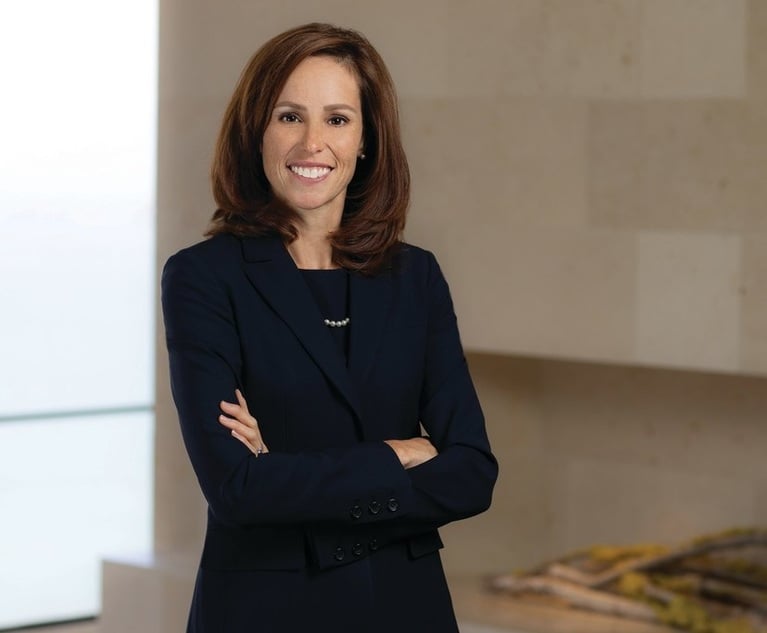
Attorney Lauren Wachtler, left, and filmmaker/ philanthropist Francine LeFrak started "Same Sky," a nonprofit venture that supports Rwandan women who were raped during the 1994 civil war and genocide in their country by teaching them to make jewelry which is marketed in the West.

Photos: NYLJ/Rick Kopstein, Same Sky

In the months prior to creating Same Sky, Ms. LeFrak shelved "One Hundred Days of Darkness," a years-long film project to document conflicts between the Hutu and Tutsi tribes in Rwanda leading to the slaughter of 800,000, according to a United Nations study. Instead, she focused on the sorrows of the forgotten, an estimated 250,000 women raped by marauding killers, among them women housed individually or in survivor camps in and around the capital city of Kigali.

"It's a bigger story," said Ms. LeFrak, of "women left behind, thin and sick and with no support, of women empowering women."

Ms. LeFrak, whose production company won an Emmy Award for the film "Miss Rose White" and the Pulitzer Prize for the stage play "Crimes of the Heart," has long been involved in philanthropies through her family's real estate development firm, the LeFrak Organization. On first meeting the forgotten women in Kigali, her impulse was charity.

But beyond money, said Ms. LeFrak, "I had to give sustainable work."

Inspired by the philosophy of Muhammad Yunus, the Bangladeshi economist and winner of the Nobel Peace Prize for his work in microenterprise bank loans, Ms. LeFrak enlisted her friend, Ms. Wachtler, in the task of building a financial foundation for the Rwandan women. With input from the Women and Public Policy Program at Harvard Kennedy School, they developed Same Sky, whose workers produce a line of hand-made bracelets marketed in the West.

Ms. LeFrak credits Ms. Wachtler with "giving me tools and structure, the level I lacked." In addition to maintaining corporate records, Ms. Wachtler handles licensing agreements with Rwandan interests, including Same Sky's association with Gayaha Links, a company that employs HIV-positive women.

The name "Same Sky," said Ms. LeFrak, "just came to me in a flash. I wanted the idea of connection and inclusion. We all live under the same sky, and the same stars."

Trade Not Aid

The two New Yorkers hope to see their venture in Rwanda become what they term a "trade-not-aid" model replicated elsewhere in the world where women bear heaviest damage from wars and natural disasters. But the idea should be kept small-scale, wherever it may develop, they say.

"When we started talking about the finer points, it became very important that we didn't have the women making more than three or four bracelets a day," said Ms. Wachtler. "They simply can't work that much. We don't want to turn this into something where everyone's out for a big profit."

Gayaha Links maintains the shop in Kigali where Same Sky workers, about 75 women at any one time, are provided stipends for daily commuting and a free lunch. Same Sky workers are provided with individual bank accounts for direct, electronic deposit of wages.

The shop also serves a secondary function as a social center for the women, who are trained in bracelet making by Gayaha's supervising artisans.

Bracelets are marketed online, at http://www.samesky.com/ and sold at retail outlets in the United States, Europe and the Caribbean, as well as private sale events, such as one tonight at DKNY Madison Avenue, and December's special sale at the Sackler Center for Feminist Art, part of the Brooklyn Museum of Art. The result is "justice in the finest tradition of the New York bar," said David M. Crane, a professor at Syracuse University College of Law and from 2002 to 2005 chief prosecutor of the Special Court for Sierra Leone, a U.N. war crimes tribunal.

Reached at his vacation home in the Great Smoky Mountains, Mr. Crane said in an interview, "Women and children bear the brutal price of internal armed conflict throughout the world. The Same Sky program is a tremendous symbiosis of nurturing, healing and providing a future. It's making a difference in facing down the beast of impunity."

Meanwhile, Ms. LeFrak has not entirely given up on the idea of filming a Rwanda-based documentary, this time about the women of Same Sky. She and Ms. Wachtler, whose practice area at Mitchell Silberg includes securities and insurance defense, promote the sale of Same Sky bracelets in New York.

"Every once in awhile I'll have an idea for marketing [Same Sky bracelets], and that's fun for me," said Ms. Wachtler. "It's a departure from being just the lawyer."

As counsel for Same Sky, she added, "It's not like I'm a lawyer trying to undo a deal. I'm a lawyer trying to build a dream."


lawjobs.com

QUICK SEARCH


Terms of Use and Privacy Policy

  About ALM  |  About Law.com  |  Customer Support  |  Terms & Conditions