Law.com Home Newswire LawJobs CLE Center LawCatalog Our Sites Advertise An ALM website
New York Lawyer

Home | Register | Login | Classified Ads | Message Boards

Search
 
Law Firms
New! Hard Times
NYLJ Professional
Announcements
Lawyer to Lawyer
The NYLJ 100
The AmLaw 100
The AmLaw 200
The AmLaw Midlevel
Associates Survey
The Summer
Associates Survey
The NLJ 250
 
Beyond Firms
The New York Bar Exam
Pro Bono
New! Lifestyles
NYLJ Fiction Contest
 
You Passed!
 

Get Advice
Advice for the Lawlorn
Crossroads
Message Boards
Services
Contact Us
Corrections
Make Us Your
Home Page
Shop LawCatalog.com
This Week's
Public Notices
Today's Classified Ads
Who We Are
Public Notices
Create a Domestic LLC/LLP Public Notice
Place a Foundation Ad


Pro Bono
New York City Pro Bono Training Calendar
New York State Pro Bono Opportunities Guide


New York Lawyer | April 20, 2010

Reprints & Permissions

The Innocence Project Has Sparked a Movement, Founder Says

Subscribe to the Daily Report - 30 Days Free!

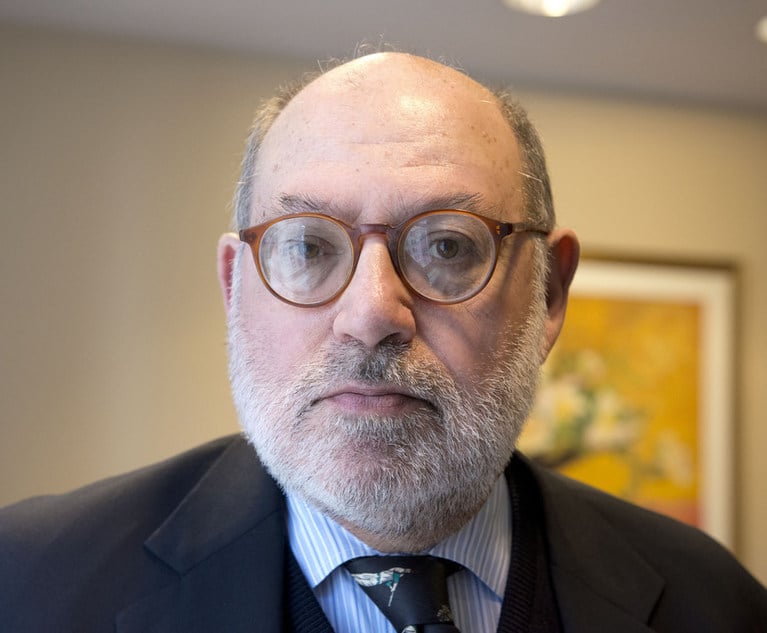
ATLANTA - The effort to free wrongfully convicted people from prison has grown from a few projects to an "international human rights movement in pursuit of the rule of law," said the Innocence Network's co-founder, Peter J. Neufield, at the group's 10th annual conference Friday at the Atlanta Marriott Marquis.

"The movement," said Neufield, "is making its way into the zeitgeist and public consciousness," which he attributed in part to press coverage of the increasing number of exonerations the umbrella group's members have brought about.

The Innocence Network's 59 member organizations prompted the release of 30 people from prison last year, said Keith Findley, the group's president, after they'd been wrongfully convicted based on mistaken eyewitness identifications, false confessions, faulty evidence or other problems. He said 12 were exonerated based on DNA evidence.

Neufield said there were only eight projects nationwide in 2000, when he and Barry C. Scheck started the Innocence Network. Just last year, he said, nine new projects joined, including ones in Canada and Australia. The network is an outgrowth of the Innocence Project, which Neufield and Scheck co-founded in 1992 and is housed at Yeshiva University's Benjamin N. Cardozo School of Law.

About 450 people attended last weekend's conference, including members of innocence projects, law students—and 85 exonorees.

One Georgia man, Michael Marshall, was among the 30 people exonerated last year. Marshall was released from prison in December after a DNA test proved he had not stolen a truck at gunpoint. Maxwell, homeless at the time, was found sleeping in an apartment hallway near the crime scene and had a prior burglary conviction. His conviction was based on an eyewitness description of the robber, and he served nearly two years of a four-year prison sentence.

At the request of the Georgia Innocence Project, the Georgia Bureau of Investigation tested a T-shirt, cell phone and cell phone case abandoned by the robber after a high-speed chase with police, which showed the DNA did not match Maxwell's, and the actual robber was found from information in a DNA database, according to information from the Innocence Network.

Another 2009 exonoree, James Bain, served the longest time in prison—35 years in Florida—of anyone cleared of a crime through DNA testing in the U.S. Bain was convicted and sentenced to life in prison for the 1974 rape of a 9-year-old boy, based on misidentification in a photo lineup by the victim.

The innocence movement has sparked changes in how states handle criminal investigations and forensic evidence.

Scheck said a pending ruling by the New Jersey Supreme Court could set a new standard for eyewitness identification. "I think we will see a landmark decision and a new eyewitness standard out of New Jersey," he said.

According to information from the Innocence Project, 75 percent of exonorees freed with DNA testing were falsely imprisoned based on inaccurate eyewitness identifications. The New Jersey Supreme Court convened a hearing last fall to examine current witness identification procedures used by state law enforcement. New Jersey adopted reforms in 2001 in how lineups are conducted.

Scheck said favorable court decisions are key to getting laws passed that improve forensic evidence standards. "You really have to kick some ass in the courts and get the judges to pay some attention to the science. The better that goes, the more success we can have with legislation," he told the group.

Neufield said that in the past decade, the number of states with statutes allowing post-conviction DNA testing has increased from two to 47, plus the District of Columbia. Many states now require the preservation of biological evidence, he said, and the National Institute of Standards and Technology is

formulating best preservation practices for the whole country.

Neufield said 16 states plus about 500 municipalities require interrogations to be recorded.

Helping exonorees return to regular life is becoming a bigger part of the innocence movement. Neufield said 13 states have passed laws to compensate exonorees for their time in prison and seven of those mandate job training, therapy, education and other services. Many exonorees were convicted at a young age and have spent years in prison, so they need help developing job and life skills for a successful transition to society. For example, Bain—the Florida exonoree—was convicted at 19 and was 54 when released from prison last year.

In a sign of the Innocence Network's maturation, the group gave out awards for the first time, honoring three reporters and a police detective.

The journalism award went to two Columbus [Ohio] Dispatch reporters, Mike Wagner and Geoff Dutton. Their initial five-part series in January 2008 on securing DNA testing for a sample of Ohio inmates whose requests had been turned down by the state has led to about 60 follow-up stories. It has brought about two exonerations and been a catalyst for new legislation to reform the way the state handles interrogations, lineups and evidence preservation.

"It would not have passed if not for Geoff and Mike. They changed the public conversation regarding these issues. I've never seen a series have an impact like this," said Mark A. Godsey, the director of the Ohio Innocence Project, who presented the award. Godsey's group partnered with the Columbus Dispatch for the story.

"I've spent a lot of my career trying to avoid criminal justice stories," said Dutton. "It seemed like an intractable, immovable system where you cannot achieve anything.

"I can't say this project changed that," he added, but said it has been "a life-changing experience."

Pete Shellem, a reporter for The Patriot-News in Harrisburg, Pa., received a lifetime achievement award. Shellem's dogged reporting on wrongful convictions led to the exoneration of seven people in Pennsylvania over his career. He died last year at 49.

A retired police detective in Washington, Jim Trainum, received the Champion of Justice Award for the years he's spent educating others on proper interrogation and false confessions. Trainum said he's been motivated by a life-changing moment on the job when a suspect confessed to a crime and it was later shown to be impossible for her to be at the scene when the crime was committed.


lawjobs.com

QUICK SEARCH


Terms of Use and Privacy Policy

  About ALM  |  About Law.com  |  Customer Support  |  Terms & Conditions